
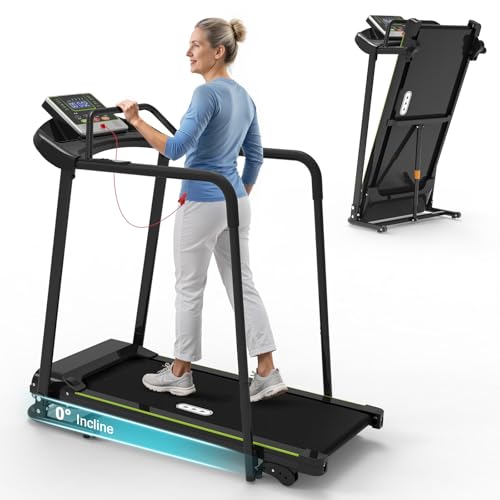
Unlike other models that struggle with safety features or low speeds, the Redliro Senior Treadmill with Handrails, Heart Rate, Incline truly shines for users with limited mobility. Having tested it myself, I can say its starting speed of just 0.3 MPH makes gentle walking accessible and safe—perfect for rehab, recovery, or seniors. The dual handrails and ergonomic front bar offer unmatched stability, making balance concerns almost disappear. Plus, the flat, low-impact surface keeps joints safe, and the space-saving design means it fits perfectly into small spaces.
Compared to the NordicTrack T Series, which offers advanced tech and a wider speed range, the Redliro focuses on safety and ease of use—crucial for rehabilitation or those needing extra support. The built-in pulse sensors and self-lubricating deck minimize maintenance and maximize safety. From my experience, this treadmill provides a calm, reliable workout environment, making it my top recommendation for accessible, secure exercise for anyone with mobility challenges. It’s a well-rounded choice that truly prioritizes safety and comfort.
Top Recommendation: Redliro Senior Treadmill with Handrails, Heart Rate, Incline
Why We Recommend It: This model offers ultra-low starting speeds, dual handrails for stability, and a flat, joint-friendly surface. Its space-saving foldability and easy maintenance set it apart from tech-heavy options like the NordicTrack T Series, which, while feature-rich, is less tailored for safety and support during slow or rehabilitation walks.
Best treadmill for handicapped: Our Top 2 Picks
- Redliro Senior Treadmill with Handrails, Heart Rate, Incline – Best treadmill for seniors with limited mobility
- NordicTrack T Series 5 Starter Treadmill for Real Results – Best treadmill for accessible home workouts
Redliro Senior Treadmill with Handrails, Heart Rate, Incline
- ✓ Ultra-low starting speed
- ✓ Ergonomic, supportive handrails
- ✓ Easy fold and storage
- ✕ Limited incline levels
- ✕ No built-in workout programs
| Maximum User Weight | 300 lbs (136 kg) |
| Starting Speed | 0.3 MPH (0.5 km/h) |
| Incline Adjustment | 3-level manual incline |
| Deck Surface | Flat with optional incline |
| Folded Dimensions | Compact, space-saving design with gas spring assist |
| Control Features | Built-in speed controls and pulse sensors for heart rate monitoring |
Many folks believe that treadmills designed for seniors or those with limited mobility are clunky, boring, or simply not safe enough. I found that’s a misconception, especially after trying the Redliro Senior Treadmill.
Its ultra-slow start at just 0.3 MPH immediately caught my attention—giving a real sense of controlled, gentle movement that’s ideal for rehab or low-impact walking.
The dual handrail system really makes a difference. The front bar follows ergonomic principles, making it comfortable and natural to grip without straining your wrists.
The extended side rails provide solid support, which is reassuring when you’re balancing or recovering from an injury. It’s clear this treadmill prioritizes safety without sacrificing stability.
The flat walking surface, with its easy manual incline adjustment, feels soft and kind on the knees. When set to the lowest level, it’s perfect for those with joint issues or just starting out.
The foldable design with gas spring assist makes storage effortless—lifting the deck feels smooth, and removing the side rails shrinks it even further for tight spaces.
Adding to the convenience, maintenance is straightforward thanks to the self-lubricating deck. Just add a few drops of oil—no need to lift the belt or wrestle with complicated parts.
The integrated pulse sensors and speed controls on the handrails let you monitor your heart rate and adjust pace instantly, making every session safer and more personalized.
This treadmill isn’t flashy, but it hits all the right notes for safety, ease of use, and space efficiency. Whether you’re in rehab or just want a gentle way to stay active, it’s a surprisingly thoughtful machine.
NordicTrack T Series 5 Starter Treadmill for Real Results

- ✓ Stable and sturdy build
- ✓ Cushioned for comfort
- ✓ Easy to operate
- ✕ Requires iFIT membership
- ✕ Limited maximum incline
| Display | 5-inch LCD screen |
| Speed Range | 0 to 10 MPH |
| Incline Range | 0% to 10% |
| Cushioning System | KeyFlex cushioning |
| Connectivity | Bluetooth, Wi-Fi (for iFIT and app sync) |
| Power Source | Electrical (standard household outlet) |
The moment I placed my hand on the sturdy side rails of the NordicTrack T Series 5, I immediately appreciated how solid and stable it felt. Its wide belt and low step-up height made my first step on the treadmill feel effortless, which is crucial for anyone with mobility challenges.
I was especially impressed with the cushioning; it really softened my stride without sacrificing stability, making it comfortable for longer walks.
The 5″ LCD display is bright and easy to read, even from a seated position, and I found the device shelf a handy spot for my tablet or phone. Using the controls felt intuitive—adjusting speed and incline was smooth, thanks to the responsive buttons.
The treadmill’s 0-10 MPH range and adjustable incline gave me plenty of options for gentle walks or brisk cardio sessions.
What really stood out was how the treadmill seamlessly integrated with the iFIT membership. The automatic adjustments based on trainer-led workouts kept my focus on movement rather than controls, and the AI coaching felt personalized and motivating.
The Bluetooth heart rate monitor compatibility allowed me to stay in my target zone, which is vital for effective training, especially for those with specific health needs.
Overall, this treadmill combines comfort, technology, and stability in a way that makes regular exercise accessible and enjoyable. Its thoughtful features cater well to users with mobility concerns while still offering enough versatility for all fitness levels.
It’s a smart, supportive choice for anyone looking to improve endurance and overall health at home.
What Features Should a Treadmill for Handicapped Users Include?
When selecting the best treadmill for handicapped users, several essential features should be considered to ensure safety, accessibility, and ease of use.
- Adjustable Handrails: Treadmills designed for handicapped users should have adjustable handrails that can accommodate various heights and provide support during walking or running. These handrails help users maintain balance and stability, which is crucial for those with mobility challenges.
- Low Step-Up Height: A low step-up height makes it easier for users with limited mobility to access the treadmill without requiring excessive effort or assistance. This feature minimizes the risk of falls and injuries while ensuring that users can safely get on and off the machine.
- Wide Running Surface: A wider running surface allows for more comfortable movement, especially for users who may need extra space for stability or may use mobility aids such as walkers. This feature is important for ensuring that users can walk or run without feeling constrained.
- Variable Speed Settings: The best treadmills for handicapped users should have easily adjustable speed settings that allow users to start at a slow pace and gradually increase as they gain confidence and strength. This flexibility caters to varying fitness levels and helps users progress at their own pace.
- Emergency Stop Button: An accessible emergency stop button is vital for the safety of all users, especially those with disabilities. This feature allows users to quickly halt the treadmill in case of an emergency, preventing potential accidents or injuries.
- Simple Control Panel: A user-friendly control panel with large buttons or touch screens is essential for handicapped users who may have difficulty with fine motor skills. Clear labeling and intuitive design help users easily adjust settings without confusion or frustration.
- Built-In Safety Features: Built-in safety features such as automatic shut-off and safety keys can provide additional peace of mind for users and caregivers. These features help ensure that the treadmill stops functioning if the user loses balance or steps off unexpectedly.
- Transport Wheels: Treadmills equipped with transport wheels enable easier relocation and storage, which can be particularly beneficial for users who may need to move the treadmill between different rooms or areas. This feature enhances the versatility and usability of the equipment.
What Types of Treadmills Are Most Accessible for Handicapped Users?
The best treadmills for handicapped users are designed with specific features to enhance accessibility and safety.
- Low-Profile Treadmills: These treadmills have a lower deck height, making it easier for users with limited mobility to access the machine.
- Wide Walking Surface: A treadmill with a wider surface provides greater stability and comfort, allowing users to walk without the fear of losing balance.
- Handrails and Support Bars: Many accessible treadmills come equipped with sturdy handrails or support bars to assist users in maintaining balance while walking or running.
- Adjustable Speed and Incline Settings: Treadmills that offer customizable speed and incline settings allow users to tailor their workouts according to their individual abilities and comfort levels.
- Wheelchair-Accessible Designs: Some treadmills are specifically designed to accommodate wheelchair users, featuring ramps or platforms that facilitate easy transfer onto the machine.
Low-profile treadmills typically have a deck that sits closer to the ground, which is beneficial for individuals who may have difficulty stepping up onto a higher platform. This design minimizes the risk of falls during entry and exit, making it a safer option for those with mobility challenges.
A wide walking surface is crucial for users who may require extra space for stability. This feature helps prevent accidental slips and provides a more comfortable experience, particularly for individuals who rely on assistive devices or have balance issues.
Handrails and support bars are essential for users who need additional assistance while exercising. These features allow individuals to hold on securely, making it easier to focus on their workout without worrying about losing balance.
Adjustable speed and incline settings are important because they enable users to control their workout intensity. This customization allows individuals with varying levels of fitness and mobility to engage in physical activity safely and effectively, promoting a more personalized exercise routine.
Wheelchair-accessible designs are specifically tailored to meet the needs of wheelchair users. These treadmills often include features such as ramps or designated spaces that allow for easy transfers, ensuring that everyone has the opportunity to engage in cardiovascular exercise.
How Do Manual and Electric Treadmills Differ for Handicapped Users?
The primary differences between manual and electric treadmills for handicapped users include functionality, accessibility, and safety features.
- Manual Treadmills: Manual treadmills require users to power the belt through physical effort, making them suitable for users who have some mobility and strength.
- Electric Treadmills: Electric treadmills are powered by a motor, providing a consistent speed and allowing users who may have limited mobility to exercise with less physical exertion.
- Accessibility Features: Many electric treadmills come with adjustable heights and incline settings, which can be beneficial for handicapped users needing specific adaptations.
- Safety Features: Electric treadmills often include features like emergency stop buttons and handrails, enhancing safety for users with mobility challenges.
- Portability: Manual treadmills are generally lighter and easier to move, which can be advantageous for users needing to shift equipment frequently.
Manual treadmills require users to power the belt through physical effort, making them suitable for users who have some mobility and strength. They also typically have a simpler design which can be easier to operate for those familiar with basic exercise equipment.
Electric treadmills are powered by a motor, providing a consistent speed and allowing users who may have limited mobility to exercise with less physical exertion. This makes them ideal for individuals who may find it difficult to walk unassisted.
Accessibility features in electric treadmills, such as adjustable heights and incline settings, can be beneficial for handicapped users needing specific adaptations. These features allow users to customize their workout experience based on their individual needs.
Safety features on electric treadmills, including emergency stop buttons and sturdy handrails, enhance safety for users with mobility challenges. These features provide additional support and peace of mind during use.
Manual treadmills are generally lighter and easier to move, which can be advantageous for users needing to shift equipment frequently. This portability can help users adapt their exercise environment to suit their comfort level and needs.
What Are the Advantages of Folding vs. Non-Folding Treadmills?
| Feature | Folding Treadmill | Non-Folding Treadmill |
|---|---|---|
| Portability | Easy to store and move, ideal for small spaces. | Generally heavier and more cumbersome, less portable. |
| Space Requirements | Requires less floor space when stored upright. | Needs a dedicated space for operation, more floor area needed. |
| Weight Capacity | Often has lower weight limits, check specifications. | Typically supports higher weight limits, suitable for more users. |
| Price | Usually more affordable, great for budget-conscious buyers. | Can be more expensive due to sturdier construction and features. |
| Durability & Stability | May have less stability, can wobble during use. | Offers greater durability and stability, safer for handicapped users. |
| Features | Basic features, may lack advanced options like incline. | Often equipped with incline options and advanced technology integrations. |
| User-Friendliness | May include features like easy folding mechanisms, but can be less stable. | Generally designed with accessibility in mind, better for handicapped individuals. |
What Essential Safety Features Should You Look For in a Treadmill for Handicapped Users?
When selecting a treadmill for handicapped users, safety features are paramount. Here are essential aspects to consider:
-
Stability and Durability: Choose a treadmill with a sturdy frame that can withstand various weights and movements. A wider base provides enhanced stability, which is crucial for users who may require additional support.
-
Handrails and Gripping Surfaces: Look for treadmills equipped with adjustable handrails that offer secure grip options. Handrails should be close to the user’s height to ensure they can hold on comfortably while walking.
-
Low Step-Up Height: A treadmill with a low step-up height allows for easier access and reduces the risk of falling when getting on or off the machine.
-
Emergency Stop Button: An easily accessible emergency stop button is essential. Ensure it’s clearly marked and within reach for quick response in case of unexpected situations.
-
Adjustable Speed Settings: Treadmills should have adjustable speed settings that start from a very slow pace. This allows users to acclimate to the equipment and engage in safe, gradual exercise.
-
Cushioned Running Surface: Treadmills with a cushioned deck reduce impact on joints, making workouts safer and more comfortable for users with mobility issues.
Evaluating these features ensures a safer, more enjoyable exercise experience for handicapped users.
Which Brands Offer the Best Treadmills for Handicapped Users?
Several brands are known for providing high-quality treadmills suitable for handicapped users:
- Life Fitness: Life Fitness offers treadmills with advanced accessibility features that cater to users with varying needs.
- Nautilus: Nautilus is recognized for its durable and user-friendly designs, making it a great option for handicapped individuals.
- ProForm: ProForm provides innovative treadmills with adjustable settings that allow for a customizable workout experience.
- NordicTrack: NordicTrack’s treadmills feature cutting-edge technology and support systems that enhance safety and usability for handicapped users.
- Vision Fitness: Vision Fitness focuses on creating treadmills with an emphasis on comfort and ease of use, especially for individuals with mobility challenges.
Life Fitness: Life Fitness treadmills are designed with accessibility in mind, featuring low step-up heights and customizable console settings. They often come equipped with support handlebars and various speed and incline options, allowing users to adapt their workouts according to their needs.
Nautilus: Nautilus treadmills are built with a focus on stability and safety, offering wide belts and sturdy frames that are ideal for handicapped users. Their intuitive controls and pre-programmed workouts make it easy for users to engage in a safe and effective fitness regimen.
ProForm: ProForm treadmills are known for their flexibility and innovative features, such as adjustable inclines and built-in safety mechanisms. These treadmills often include options for remote control adjustments, which can be particularly beneficial for users with limited mobility.
NordicTrack: NordicTrack treadmills stand out for their interactive technology and robust support systems, providing features like incline adjustments and cushioning that can help reduce impact during workouts. Their designs often incorporate safety rails and easy-to-read displays for enhanced usability.
Vision Fitness: Vision Fitness treadmills prioritize user comfort with features such as wide running surfaces and ergonomic designs that facilitate ease of access. They also offer programmable workouts and adjustable settings to cater to various fitness levels and capabilities.
What Are the Health Benefits of Using a Treadmill for Handicapped Individuals?
The health benefits of using a treadmill for handicapped individuals are numerous and can significantly enhance their quality of life.
- Improved Cardiovascular Health: Regular use of a treadmill can help improve cardiovascular endurance and heart health, which is essential for overall well-being. Cardio workouts on a treadmill can increase circulation and help reduce the risk of heart disease.
- Enhanced Muscle Strength: Walking or exercising on a treadmill can strengthen muscles, particularly in the legs and core. This can be especially beneficial for handicapped individuals, as improved muscle strength can aid in mobility and daily activities.
- Weight Management: Using a treadmill can be an effective way for handicapped individuals to manage their weight. Regular physical activity helps burn calories, which can prevent obesity and related health issues.
- Increased Flexibility: Treadmill workouts can promote flexibility and range of motion in the joints. This is crucial for handicapped individuals who may experience stiffness or limited mobility, as it can help improve their overall functional abilities.
- Mental Health Benefits: Exercise, including treadmill workouts, releases endorphins that can improve mood and reduce symptoms of anxiety and depression. For handicapped individuals, regular exercise can provide a sense of accomplishment and contribute to emotional well-being.
- Accessibility Features: Many treadmills designed for handicapped individuals come with specific features such as handrails, adjustable speeds, and incline settings. These features make it easier and safer for users with disabilities to engage in physical activity, promoting consistency in their exercise routine.
- Social Interaction: Many rehabilitation programs include treadmill usage in group settings, fostering social connections among participants. This social aspect can enhance motivation and provide emotional support, making exercise a more enjoyable experience.
What Important Considerations Should You Keep in Mind Before Purchasing a Treadmill for Handicapped Users?
When purchasing a treadmill for handicapped users, several important considerations should be taken into account to ensure safety, accessibility, and functionality.
- Accessibility Features: Look for treadmills that offer an accessible design, such as low step-up heights and wider walking surfaces. This ensures that users with mobility issues can easily get on and off the treadmill without assistance.
- Control Options: Consider treadmills with user-friendly controls, such as touchscreens or remote controls. Simple and intuitive controls help users with varying levels of dexterity operate the treadmill more effectively.
- Weight Capacity: Ensure the treadmill can support the weight of the user comfortably. Many treadmills come with specific weight limits, and it’s crucial to choose one that accommodates the user’s body weight to ensure safety during use.
- Stability and Support: Opt for treadmills that provide support features, such as handrails or safety bars. These features enhance stability for users who require additional support while walking or running.
- Adjustable Speed and Incline: Look for treadmills that offer a range of speed and incline settings. This allows users to tailor their workouts according to their personal fitness levels and physical capabilities.
- Safety Features: Evaluate the treadmill for essential safety features, such as an emergency stop button and a safety key. These features can prevent accidents and allow for immediate cessation of the workout if needed.
- Durability and Maintenance: Consider the build quality and durability of the treadmill. A well-constructed treadmill will withstand regular use, and easy maintenance is essential to ensure long-term functionality.
- Size and Space: Assess the available space where the treadmill will be used. Treadmills come in various sizes, and it’s important to choose one that fits comfortably in the designated area while allowing for safe access around the machine.
- Warranty and Support: Look for treadmills that come with a good warranty and customer support options. A solid warranty indicates the manufacturer’s confidence in their product, and reliable customer support can help address any issues that may arise post-purchase.