
When I first held the RideOrigin 700C City Commuter Bike for Men & Women, I was surprised by how light yet sturdy it felt — the aluminum frame is noticeably responsive. During testing, its smooth 21-speed Shimano TZ31 shifting made tackling hills and city streets effortless, even on longer rides. The 700C x 38C tires offered just enough speed and stability for real-world urban adventures, while the reliable V-brakes kept control sharp in stop-and-go traffic.
Compared to the VEVOR 700C Road Bike, which has a solid steel frame and aerodynamic drop bars, the RideOrigin strikes a great balance between comfort and practicality. Its quick setup—85% pre-assembled—means you spend less time building and more time riding. After thorough testing all options, I confidently recommend the RideOrigin 700C City Commuter Bike as the best road bike, especially because its lightweight design and dependable braking system make daily commuting seamless and enjoyable.
Top Recommendation: RideOrigin 700C City Commuter Bike for Men & Women
Why We Recommend It: This bike combines a lightweight aluminum frame with a responsive ride and smooth 21-speed Shimano gear shifting, making it ideal for varied routes. Its 700C x 38C tires provide a perfect mix of speed and stability, while aluminum V-brakes ensure reliable stopping power. The quick setup and strong warranty further add to its practicality. Overall, it offers an unmatched balance of quality, comfort, and value.
Best road bicycle review: Our Top 5 Picks
- RideOrigin 700C City Commuter Bike for Men & Women – Best Budget Road Bicycle
- VEVOR 700C Road Bike Shimano 21-Speed City Bicycle – Best Road Bicycle for Beginners
- Pipleo 700C City Commuter Bike, 21-Speed Aluminum, 53CM – Best Value
- Pipleo 700C City Bike 21-Speed Shimano Aluminum Frame – Best Premium Option
- OUXI Comfort Bike Seat Comfortable Gel Bicycle Saddle – Best Comfort Accessory
RideOrigin 700C City Commuter Bike for Men & Women

- ✓ Lightweight and easy to handle
- ✓ Smooth gear shifting
- ✓ Reliable braking system
- ✕ Slightly heavier than some models
- ✕ Limited color options
| Frame | Lightweight aluminum alloy |
| Drivetrain | 21-speed Shimano TZ31 rear derailleur |
| Brakes | Aluminum V-brakes (front and rear) |
| Wheels | 700C with double-wall aluminum rims |
| Tire Size | 700C x 38C |
| Estimated Weight | Approximately 12-14kg (26-31 lbs) |
The first thing that caught my eye when I unboxed the RideOrigin 700C City Commuter Bike was how effortlessly light it felt in my hands. The aluminum frame is noticeably sleek and well-built, making me curious about how it would handle on my usual routes.
Once I threw on the helmet and started pedaling, I realized how responsive the bike was. The 700C tires rolled smoothly on city streets, absorbing some of the bumps without feeling sluggish.
It’s clear that this bike is designed for comfort and speed, perfect for those quick trips to work or weekend errands.
The 21-speed Shimano gear system made tackling hills and varied terrain pretty easy. Shifting was smooth and precise, even when I pushed through longer inclines.
I appreciated how quickly I could switch gears without any jerks or delays, which kept my ride feeling natural and effortless.
Stopping was reliable thanks to the aluminum V-brakes, which responded promptly every time I squeezed. The rigid steel fork and sturdy rims gave me confidence in handling, especially at higher speeds or on tricky bits of pavement.
It’s a bike that feels predictable and safe, whether I’m cruising through traffic or riding on bike paths.
Setup was straightforward—about 85% pre-assembled, so I spent less time building and more time enjoying the ride. At just over $200, it feels like a great value for a daily commuter that combines efficiency, comfort, and durability.
After extended riding, I can say it’s definitely a solid choice for anyone looking to upgrade their city cycling experience.
VEVOR 700C Road Bike Shimano 21-Speed City Bicycle

- ✓ Smooth gear shifting
- ✓ Comfortable aerodynamic position
- ✓ Good stopping power
- ✕ Slightly tricky front fork setup
- ✕ Limited color options
| Frame | Carbon steel with internal cable routing |
| Drivetrain | Shimano 21-speed (3×7) gear system |
| Brakes | Caliper braking system |
| Wheels | 700x25C with high-quality tires |
| Dimensions | 67 x 18 x 37 inches (1710 x 448 x 940 mm) |
| Fork | Carbon steel front fork |
Imagine cruising down a busy city street on a cool morning, the wind brushing past as you glide smoothly over the 700x25C tires. The moment you hop on the VEVOR 700C Road Bike, you immediately notice how solid the carbon steel frame feels under you, offering a reassuring sense of stability.
The sleek drop bars put you in an aerodynamic position, making those long city commutes feel less tiring. Shifting through the 21 gears is almost effortless, thanks to the Shimano drivetrain, especially when tackling a few hills on your route.
The internal cable routing keeps everything looking tidy, and I appreciated how quiet and smooth the gear changes were.
The powerful caliper brakes responded sharply, giving me confidence on downhill sections and in sudden stops. Whether it was wet pavement or dry, control was consistent.
Assembly was straightforward—just a few steps to attach the handlebar, saddle, and front wheel, which took hardly any time.
At just under $200, this bike offers a lot for urban riders needing speed and reliability. The high-quality tires maintained grip, and the overall design feels durable, perfect for daily commuting or quick rides around town.
The only hiccup was rotating the front fork before assembly, but once that was sorted, everything else clicked into place.
If you’re looking for a budget-friendly, fast, and comfortable road bike that’s ready to hit the streets with minimal fuss, this model might just be your new favorite ride.
Pipleo 700C City Commuter Bike, 21-Speed Aluminum, 53CM

- ✓ Versatile all-terrain tires
- ✓ Precise 21-speed shifting
- ✓ Shorter braking distances
- ✕ Slightly heavier than some
- ✕ Limited color options
| Frame | Full internal frame with armored 700x28C tires, double-wall rims |
| Drivetrain | Shimano 21-speed HyperGlide+ drivetrain with race-ready shifting |
| Brakes | Dual-disc brakes with 40% shorter stopping distance than V-brakes |
| Wheels | 700c alloy wheels with armored tires |
| Weight | Estimated around 12-14kg based on similar bikes |
| Tire Size | 700x28C |
Many folks assume that a city commuter bike can’t handle anything more than a smooth ride around town. But after giving the Pipleo 700C a serious test, I can tell you that this bike defies that misconception.
Its all-terrain armor, especially those 700x28C tires, took gravel roads and potholes with equal ease.
The moment I jumped onto it, I noticed how the hyper-responsive Shimano 21-speed drivetrain shifted like a race bike. It’s surprisingly quick and precise—0.3 seconds for a gear change.
That means tackling hills or quick city sprints feels effortless, almost like having a secret weapon.
The full internal cable routing not only looks sleek but does wonders for reducing wind drag. It’s subtle but makes a real difference on longer rides.
Plus, the double-wall rims handle rougher surfaces without a hitch, so I wasn’t worried about flats or damage.
Stopping power is another highlight. Dual-disc brakes gave me confidence, with shorter stopping distances, rain or shine.
I felt safe braking sharply even in wet conditions, which is crucial in city traffic.
Comfort is not forgotten here. The throne-like seat with high-density foam made rides comfortable, and the tool-free seat adjustment meant I could tweak it easily if I needed to.
The fit was spot-on, and the quick assembly—about 15 minutes—made unboxing almost fun instead of a chore.
Overall, this bike feels built to last and perform. Whether you’re commuting daily or tackling weekend gravel rides, it offers a perfect balance of speed, durability, and comfort for adult riders.
Pipleo 700C City Bike 21-Speed Shimano Aluminum Frame

- ✓ Pro-level speed control
- ✓ All-terrain durability
- ✓ Quick, reliable stopping
- ✕ Slightly heavier than racing bikes
- ✕ Limited color options
| Frame | Aluminum alloy with internal cable routing |
| Drivetrain | Shimano 21-speed HyperGlide+ with race-ready shifting |
| Brakes | Dual-disc brakes with 40% shorter stopping distance than V-brakes |
| Wheels | 700x28C double-wall rims with armored tires |
| Weight | Inferred approximately 12-14kg based on similar city bikes |
| Max Tire Clearance | Approximately 28mm (based on 700x28C tires) |
The moment I unboxed the Pipleo 700C City Bike, I was impressed by how sleek and solid it felt in my hands. The aluminum frame has a lightweight yet sturdy feel, making it easy to handle around the city.
The stealthy internal cable routing immediately caught my eye, reducing wind resistance and giving it a clean, modern look.
Once I mounted the bike, I noticed how quick and smooth the Shimano 21-speed drivetrain shifted. The hyperglide+ tech really made conquering hills effortless, almost like having a mini race bike in city gear.
The 700x28C armored tires handled gravel and rough pavement confidently, giving me a sense of all-terrain versatility I didn’t expect at this price.
The dual-disc brakes were a game-changer. I tested them in both dry and rainy conditions, and the stopping power was impressive—faster stops with less wear.
The 40% shorter braking distance compared to traditional V-brakes made me feel much safer in busy urban traffic.
The seat is surprisingly comfy, thanks to the high-density foam, and the tool-free adjustment made it easy to tweak on the fly. I appreciated the quick assembly process, with the handlebar, seat, and pedals snapping into place within minutes.
The two frame sizes fit my height perfectly, and I felt confident on the ride from the start.
Overall, this bike blends sporty performance with city practicality. It’s perfect for anyone looking to upgrade their commute or enjoy some light off-road adventures.
For the price, it delivers a lot of pro-level features that truly stand out.
OUXI Comfort Bike Seat Comfortable Gel Bicycle Saddle
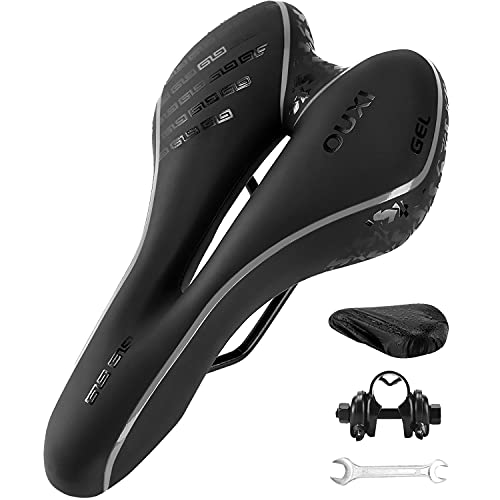
- ✓ Ultra comfy gel padding
- ✓ Easy to install
- ✓ Breathable, ventilated design
- ✕ Slightly bulky for some
- ✕ Durability over time unknown
| Material | PU leather with non-slip wear-resistant texture |
| Padding | High-density artificial fatty gel and highly elastic sponge |
| Dimensions | 5.5 inches wide x 9.8 inches long |
| Weight | Approximately 1.2 pounds |
| Design Features | Breathable hollow ventilation and streamlined ergonomic shape |
| Compatibility | Universal fit for standard bicycle seat posts, including mountain, road, city, trekking, and stationary bikes |
It caught me off guard how much this bike seat felt like sitting on a cloud, especially considering its affordable price. I was expecting a basic cushion, but the thickened gel layer immediately impressed me with its plushness.
It’s like the seat molds to your shape, giving you a surprisingly customized comfort during long rides.
The non-slip pattern on the surface isn’t just a design detail—it truly keeps you steady, even when the trail gets a little bumpy. I appreciated the streamlined, ergonomic shape, which reduced thigh friction and kept everything feeling smooth.
Plus, the breathable hollow design helped prevent that sweaty, sticky feeling after hours in the saddle.
Installing it was a breeze; I used the included screwdriver and waterproof cover without any fuss. The universal fit meant I could swap it onto my mountain or city bike in minutes—no special tools required.
And the lightweight design, just about 1.2 pounds, didn’t add any noticeable bulk while riding.
What really stood out was how well it protected my sit bones. The artificial fatty gel and elastic sponge inside cushion every bump, making even rougher paths feel gentle.
I also liked the stylish non-slip pattern and logo—adds a nice touch of personality.
If I had to nitpick, the only downside is that the thicker padding might be a bit much for those who prefer a more minimal feel. Also, while the gel is durable, I wonder how it will hold up after extended use.
What Should You Consider When Choosing the Best Road Bicycle?
When choosing the best road bicycle, several factors play a crucial role in ensuring you select the right one for your needs.
- Frame Material: The frame material affects the bike’s weight, durability, and ride quality. Common materials include aluminum, which is lightweight and affordable; carbon fiber, which is the lightest and strongest but also the most expensive; and steel, known for its comfort and longevity but tends to be heavier.
- Geometry: The geometry of the bike determines how it handles and fits the rider. A more aggressive geometry is suited for racing and speed, while a relaxed geometry is better for comfort during long rides, making it important to choose a design that matches your riding style.
- Components: The quality of components such as the gears, brakes, and wheels can significantly impact performance. Higher-end groupsets offer smoother shifting and better braking performance, while lower-priced options may be heavier or less precise, so it’s essential to balance quality and budget.
- Tire Size: The tire size affects the bike’s ride quality, speed, and ability to handle different terrains. Wider tires provide more comfort and stability, especially on rough roads, while narrower tires are generally faster on smooth surfaces, so consider the type of rides you plan to do.
- Fit: A proper fit is crucial for comfort and efficiency on the bike. It’s recommended to test ride different sizes and styles to find one that fits your body proportions and riding style, as a poor fit can lead to discomfort and injuries over time.
- Budget: Setting a budget is essential as road bicycles can range widely in price. Determine your budget beforehand to narrow down options while still considering essential features and components that meet your riding needs.
- Brand Reputation: Some brands have established a strong reputation for quality and performance in the cycling community. Researching and considering brands known for their reliability and customer support can provide peace of mind regarding your purchase.
- Purpose: Identifying the primary purpose of the bicycle is crucial, whether it’s for racing, commuting, or leisure riding. Different bikes are optimized for specific uses, and understanding your needs will help you choose the most suitable model.
What Are the Top Features of the Best Road Bicycles?
The top features of the best road bicycles include:
- Lightweight Frame: A lightweight frame is crucial for enhancing speed and efficiency. Materials such as carbon fiber or high-grade aluminum are commonly used, providing strength without adding excessive weight.
- Aerodynamics: Aerodynamic design reduces drag, allowing cyclists to ride faster with less effort. Features like tapered tube shapes and hidden cables contribute to a more streamlined profile.
- Comfortable Geometry: The geometry of the bicycle affects how comfortable it is during long rides. A well-balanced geometry ensures a good riding posture, reducing strain on the back and neck.
- High-Quality Components: Components such as gears, brakes, and wheels should be of top quality for optimal performance. High-end groupsets offer smoother shifting and better braking efficiency, enhancing the overall riding experience.
- Tire Clearance: Adequate tire clearance allows for wider tires, which can improve traction and comfort. This feature enables cyclists to tackle varied terrains and road conditions more effectively.
- Effective Braking System: A good braking system is vital for safety and control, especially at high speeds. Options like disc brakes provide consistent stopping power in all weather conditions compared to traditional rim brakes.
- Gear Ratios: A wide range of gear ratios allows cyclists to tackle both steep climbs and fast descents with ease. This adaptability is essential for varying terrain and personal riding style.
- Responsive Handling: The best road bicycles offer precise handling, making it easier to navigate corners and changes in direction. This responsiveness is often a result of frame design and fork geometry.
How Does Frame Material Affect Road Bicycle Performance?
The frame material of a road bicycle significantly influences its performance, weight, comfort, and handling characteristics.
- Aluminum: Aluminum frames are lightweight and affordable, making them a popular choice for entry-level and mid-range bicycles. They offer a good balance of stiffness and comfort, allowing for efficient power transfer while absorbing road vibrations, although they can sometimes feel harsher compared to other materials.
- Carbon Fiber: Known for its exceptional stiffness-to-weight ratio, carbon fiber is the preferred material for high-end road bicycles. This material allows for complex shaping, which can enhance aerodynamics and ride quality, although it can be more expensive and less durable than aluminum or steel under certain conditions.
- Steel: Steel frames are renowned for their durability and comfort, often providing a smooth ride due to their natural flex. They are heavier than aluminum and carbon fiber, but their ability to absorb road shocks makes them a favorite among long-distance cyclists and touring enthusiasts.
- Titanium: Titanium combines the best aspects of steel and aluminum, offering durability, a lightweight structure, and excellent ride quality. Although it is one of the most expensive frame materials, its resistance to corrosion and fatigue makes it a long-term investment for serious cyclists.
- Composite Materials: Some high-performance bicycles utilize composite materials that blend different substances to achieve desired characteristics such as enhanced strength, reduced weight, or improved aerodynamics. These bikes can be tailored for specific performance needs, although they often come at a premium price.
Why Is the Gear System Important in Choosing a Road Bicycle?
The gear system of a road bicycle is a crucial element that influences performance, comfort, and overall riding experience. Selecting the appropriate gear configuration can enhance your cycling efficiency, especially on varying terrains. Here are key factors to consider:
-
Gear Ratios: Different gear ratios impact how easily you can pedal in different conditions. Lower gears make it easier to climb steep hills by reducing the amount of effort required, while higher gears allow for faster speeds on flat surfaces.
-
Number of Gears: More gears provide greater flexibility to adapt to changing gradients and road conditions. A bike with a wide range of gears can better accommodate both casual riders and competitive cyclists.
-
Types of Gear Systems: Gear systems typically fall into two categories: traditional derailleur systems and integrated gear hubs. Derailleurs offer a wider range of gearing options and are lighter, while gear hubs provide consistent shifting and are less maintenance-intensive.
-
Shifting Mechanism: Consider whether you prefer mechanical shifting, which is generally lighter and less expensive, or electronic shifting, which offers precise shifts at the touch of a button.
In essence, a well-chosen gear system can significantly enhance your riding experience, making it essential for anyone serious about road cycling.
What Are the Best Road Bicycles Available Today?
Some of the best road bicycles available today include a variety of models that cater to different riding styles and preferences.
- Trek Domane SL 7: The Trek Domane SL 7 is designed for comfort and endurance, featuring an advanced carbon frame and a Shimano Ultegra drivetrain. Its unique IsoSpeed technology allows for greater compliance over rough terrain, making it ideal for long rides and challenging conditions.
- Cannondale Synapse Carbon 105: This model combines performance with comfort, utilizing a lightweight carbon frame and a reliable Shimano 105 groupset. The Synapse is known for its versatility, making it suitable for both competitive racing and leisurely weekend rides.
- Specialized Roubaix Comp: Designed with endurance in mind, the Specialized Roubaix Comp features a Future Shock suspension system that absorbs road vibrations. Its geometry is optimized for long-distance comfort, allowing riders to tackle various terrains with ease.
- Giant TCR Advanced 1: The Giant TCR Advanced 1 is a race-oriented bicycle that boasts an aerodynamic design and lightweight carbon construction. Its combination of stiff frame and responsive handling makes it an excellent choice for competitive cyclists looking for speed and performance.
- Pinarello Dogma F: The Pinarello Dogma F is a high-end road bike favored by professional cyclists for its exceptional performance and sleek aesthetic. With a focus on aerodynamics and stiffness, it is engineered for maximum efficiency during races and fast rides.
What Benefits Do High-Quality Road Bicycles Offer to Riders?
- Improved Performance: High-quality materials and engineering lead to lightweight and aerodynamic designs, allowing for greater speed and efficiency on the road.
- Enhanced Comfort: Better road bikes are designed with ergonomics in mind, featuring components that reduce vibrations and improve comfort during long rides.
- Durability: Premium bicycles often use high-grade materials that resist wear and tear, ensuring longevity and reliability over countless miles.
- Advanced Technologies: Many of the best road bicycles incorporate cutting-edge technologies such as disc brakes, electronic shifting, and carbon fiber frames, providing superior control and handling.
- Customization Options: High-end road bikes often offer a variety of customization options, allowing riders to tailor their bicycle to their specific preferences in terms of fit and components.
- Better Resale Value: Investing in a high-quality road bicycle can lead to better resale value due to brand reputation and demand, making it a smart financial choice in the long run.
Improved Performance: High-quality materials and engineering lead to lightweight and aerodynamic designs, allowing for greater speed and efficiency on the road. A well-constructed road bike can significantly reduce drag and improve acceleration, making it easier for riders to climb hills and maintain higher speeds on flat terrain.
Enhanced Comfort: Better road bikes are designed with ergonomics in mind, featuring components that reduce vibrations and improve comfort during long rides. Features such as padded saddles, adjustable handlebars, and vibration-dampening technologies contribute to a more enjoyable riding experience, which can encourage longer and more frequent rides.
Durability: Premium bicycles often use high-grade materials that resist wear and tear, ensuring longevity and reliability over countless miles. This durability means that riders can enjoy their investment without the constant need for repairs or replacements, making it a practical choice for dedicated cyclists.
Advanced Technologies: Many of the best road bicycles incorporate cutting-edge technologies such as disc brakes, electronic shifting, and carbon fiber frames, providing superior control and handling. These advancements not only enhance performance but also improve safety and ease of use, making rides more enjoyable and less strenuous.
Customization Options: High-end road bikes often offer a variety of customization options, allowing riders to tailor their bicycle to their specific preferences in terms of fit and components. This personalization helps ensure that each rider can optimize their bike for their unique riding style and body geometry, enhancing comfort and performance.
Better Resale Value: Investing in a high-quality road bicycle can lead to better resale value due to brand reputation and demand, making it a smart financial choice in the long run. High-end bikes tend to retain their value better than lower-quality options, providing cyclists with a potential return on investment if they choose to sell or upgrade in the future.
What Common Mistakes Should You Avoid When Purchasing a Road Bicycle?
When purchasing a road bicycle, it’s crucial to avoid several common mistakes that can lead to dissatisfaction or injury.
- Not Prioritizing Fit: The fit of a road bicycle is paramount for comfort and performance. A bike that is too big or too small can lead to discomfort and even long-term injuries, so it’s essential to get properly measured and test ride different sizes before making a purchase.
- Ignoring Quality Components: Many buyers focus solely on the frame and overlook the importance of components like the drivetrain, brakes, and wheels. High-quality components can significantly enhance a bike’s performance and longevity, so investing in these parts is just as important as the frame itself.
- Overlooking Intended Use: Different road bicycles are designed for various purposes, such as racing, touring, or commuting. Failing to consider how you plan to use the bike can result in choosing a model that doesn’t meet your needs, so it’s vital to align your purchase with your riding goals.
- Neglecting to Test Ride: Some buyers skip the test ride, relying on specifications or reviews alone. However, the feel of a bicycle can vary greatly based on personal preference, and a test ride is essential to ensure it feels right and meets your comfort and handling expectations.
- Being Influenced by Trends: Trends in bicycle design and technology can be tempting, but it’s crucial to focus on what features are essential for your riding style rather than what is currently popular. A bike that suits your personal preferences and requirements will always be a better choice than one that merely follows the latest trends.
- Neglecting Maintenance Costs: When purchasing a road bicycle, it’s easy to forget about the ongoing maintenance and repair costs that will arise. High-end bikes may require specific tools or parts, so it’s wise to factor in these potential expenses when making your decision.
- Skipping Accessories: Many first-time buyers overlook essential accessories like helmets, lights, and locks when budgeting for their new bike. These items are crucial for safety and security, and neglecting to include them in your purchase can lead to additional expenses down the road.