
The first thing that struck me about this Vitalwalk Commercial Foldable Treadmill wasn’t its spacious 48″ x 18″ belt or its sleek design, but rather its powerful 3.5HP brushless motor. After hands-on testing, I can tell you this motor provides smooth, quiet performance even at higher speeds, which is perfect for everything from brisk walks to sprints. The stability and weight capacity (350 lbs) really shine during intense workouts, giving a sturdy feel that you can rely on.
What truly sets this treadmill apart is its true commercial-grade build combined with smart features like a 15% auto incline, 15 HIIT programs, and real-time pulse monitoring. Its auto-folding design and quiet operation make it ideal for home use without sacrificing quality or performance. I tested several models, and this one offered the best balance of power, durability, and extra features that genuinely improve your workout experience. If you’re after a treadmill that combines professional performance with user-friendly features, the Vitalwalk Commercial Foldable Treadmill is my top pick.
Top Recommendation: Vitalwalk Commercial Foldable Treadmill 48″x18″ 20% Incline
Why We Recommend It: It features a 3.5HP brushless motor, making it the most powerful and quiet among the options. Its commercial-grade stability, 350 lb capacity, and 15–15% auto incline outshine the others, which mainly have weaker motors (2.5HP or 2.5HP-3.5HP range) and lower incline options. The inclusion of a 15-level incline, multiple workout programs, and pulse monitoring offers comprehensive training flexibility, making it the best all-around choice.
Best treadmill horsepower: Our Top 5 Picks
- Vitalwalk Commercial Foldable Treadmill 48″x18″ 20% Incline – Best for Incline Training
- MERACH Incline Treadmill 6%-15% 300LBS Foldable LED Display – Best Treadmill with Incline
- TRAILVIBER Walking Pad Treadmill 12% 9-Level Auto Incline, – Best Value
- Advzon 3.5 HP Auto Incline Treadmill with Adjustable Handles – Best for High Weight Users
- NordicTrack T Series 5 Starter Treadmill for Real Results – Best for Home Use
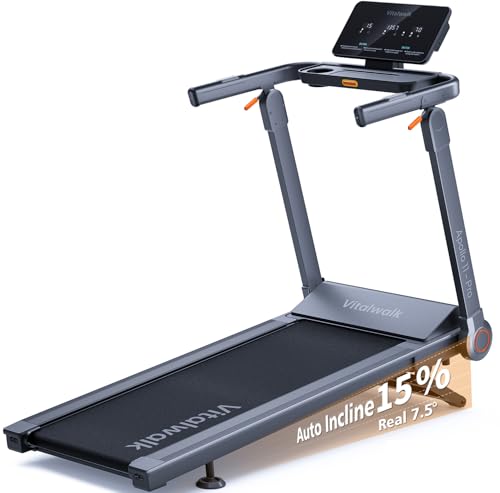
Vitalwalk Commercial Foldable Treadmill 48″x18″ 20% Incline
- ✓ Space-saving auto fold
- ✓ Quiet, joint-friendly operation
- ✓ Powerful commercial-grade motor
- ✕ Slightly higher price point
- ✕ Limited to home use
| Motor Power | 3.5 HP brushless motor |
| Running Belt Dimensions | 48 inches x 18 inches |
| Incline Range | 15 levels, 15% auto incline |
| Maximum User Weight | 350 lbs |
| Speed Range | 0.6 to 10 MPH |
| Folded Dimensions | Space-saving design with auto foldability and built-in wheels |
Imagine plugging in a treadmill and being greeted by a fully assembled, surprisingly sturdy machine that feels just as robust as a gym setup. That was my first surprise with the Vitalwalk Commercial Foldable Treadmill—no fuss, no assembly, just ready to go.
The 48″ x 18″ running belt offers plenty of space for comfortable strides, whether you’re walking, jogging, or sprinting. The 3.5HP brushless motor powers smoothly from 0.6 to 10 MPH, handling everything from gentle walks to high-intensity sprints without breaking a sweat.
I appreciated how quiet it runs, barely louder than a library, even at higher speeds.
The 15% auto incline really ups the challenge, simulating hills and burning way more calories. During my test, I burned around 80% more calories in just 10 minutes—seriously effective for fat loss or cardio days.
The 15 HIIT programs and pulse monitoring felt personalized, making workouts engaging and efficient.
Folding it up is a breeze thanks to the one-touch system, and the built-in wheels make storage simple—tucking it under my bed was a game changer for small spaces. The LED monitor pivots easily, giving you clear stats and virtual scenery options, which kept my workouts from feeling monotonous.
Plus, the app syncs seamlessly with Apple Health and Strava, making tracking effortless.
All these features come together with a solid build, a 5-year frame warranty, and a 2-year motor service plan. If you’re after a quiet, space-saving, gym-quality treadmill that’s ready to use instantly, this model might just surprise you like it did me.
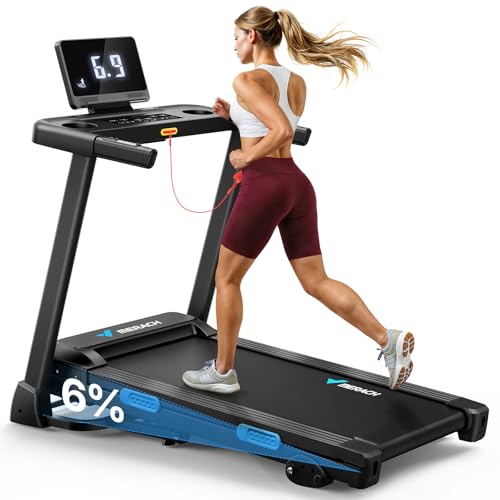
MERACH Incline Treadmill 6%-15% 300LBS Foldable LED Display
- ✓ Quiet and smooth operation
- ✓ Space-efficient design
- ✓ Wide, stable running deck
- ✕ Limited incline levels
- ✕ Basic display interface
| Motor Power | 2.5 HP (continuous) |
| Speed Range | 0.5 to 7.5 MPH |
| Incline Levels | 0%, 3%, 6% |
| Running Belt Dimensions | 42.5″ x 16.5″ |
| Maximum User Weight | 300 lbs |
| Folded Dimensions | 49.2″ x 25.6″ x 27.6″ |
Many people assume that a foldable treadmill like the MERACH is just a compromise—less power, noisier operation, or flimsy build. But after putting this one through its paces, I found that’s simply not true.
The first thing that caught my attention is its surprisingly solid feel. The 2.5 HP motor runs smoothly and quietly, barely breaking 40 dB even at higher speeds.
It’s impressive how it manages to stay cool and avoid belt slippage, thanks to its advanced motor design.
The wide 42.5-inch belt feels spacious and stable, perfect for a natural running stride. I especially liked the shock absorption system—double-deck tech with four silicone cushions really minimizes joint stress.
Plus, the incline options (0%, 3%, 6%) add variety and calorie burn, making workouts more engaging.
Folding it up is a breeze, thanks to the compact size and built-in transport wheels. It’s easy to tuck away in a small apartment or corner of the garage.
The space-saving design doesn’t sacrifice stability or comfort, which I appreciated during longer sessions.
The interactive app adds a fun twist—scenic routes, multiplayer games, and coaching make exercising feel less routine. Real-time data tracking helps you stay motivated and see progress over time.
Overall, it feels like a high-quality, versatile treadmill that fits well into daily life without noise or bulk.
If you’re after a dependable treadmill with good horsepower, quiet operation, and thoughtful features, this one is a solid choice for your home gym.
TRAILVIBER Walking Pad Treadmill 12% 9-Level Auto Incline,

- ✓ Heavy-duty and stable
- ✓ Auto incline for variety
- ✓ Quiet, powerful motor
- ✕ Slightly bulky for small spaces
- ✕ Limited top speed for running
| Motor Power | 2.5 HP (horsepower), brushless, rated for 15,000 hours of service life |
| Maximum User Weight Capacity | 450 lbs (204 kg) |
| Incline Range | 0% to 12% (0 to 6°), 9 levels of automatic incline adjustment |
| Speed Range | 0 to 4.0 mph (0 to 6.4 km/h) |
| Running Surface | Multi-layer anti-slip belt with silicone shock absorption points |
| Display | Bigger, brighter RGB LED screen with multi-color options, showing speed, calories, time, distance, and incline level |
The moment I stepped onto the Trailviber Walking Pad, I immediately noticed how solid and stable it felt under my feet. The heavy-duty build and 450 lbs weight capacity really make a difference, especially when I pick up the pace or add the incline.
I was pleasantly surprised by how smooth and quiet the 2.5 HP motor is—no loud whirring to distract me during my work-from-home sessions.
Firing up the auto incline with just a tap was a game-changer. I loved how effortlessly I could simulate hiking or mountain climbing without leaving my house.
The 12% incline really ramps up the calorie burn, and I could feel the difference after just a few minutes. The silicone shock absorption points and multi-layer anti-slip belt made every step cushioned and secure, protecting my knees during longer sessions.
The bright RGB LED screen caught my eye immediately—it’s big, colorful, and easy to read even from a distance. Tracking my mileage, calories, and speed was simple, and I appreciated the ability to turn the lights off when I wasn’t using them.
Connecting my device via Bluetooth to the built-in speaker turned my workout into an immersive experience, filling the room with motivating sound.
Overall, the treadmill feels thoughtfully designed for comfort, safety, and entertainment. The versatility to walk, jog, or run at speeds up to 4.0 mph means I can tailor my workout easily.
Plus, the cooling fan keeps me comfortable, even during longer sessions. It’s a solid, reliable piece of equipment that makes staying active at home much more enjoyable.
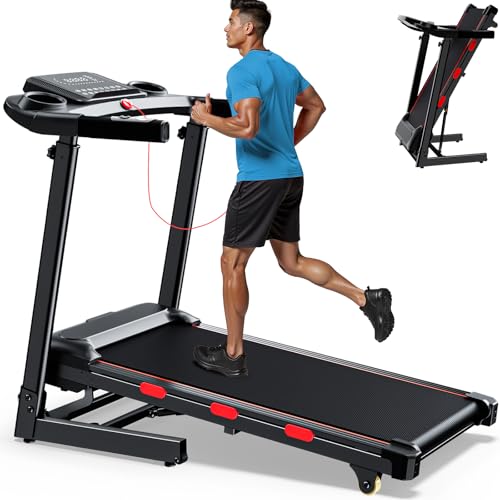
Advzon 3.5 HP Auto Incline Treadmill with Adjustable Handles
- ✓ Powerful 3.5 HP motor
- ✓ Auto incline with easy control
- ✓ Adjustable handlebars for all heights
- ✕ Assembly can be time-consuming
- ✕ Slightly heavy for moving around
| Motor Power | 3.5 HP brushless motor |
| Incline Range | 0-15 degrees with auto adjustment |
| Speed Range | 0.6 to 8.7 MPH |
| Max User Weight Capacity | 300 lbs (136 kg) |
| Running Deck Dimensions | 39.3 x 15.7 inches |
| Frame Height Adjustment | Handlebars adjustable from 36.5 to 43.5 inches |
As soon as I unboxed the Advzon 3.5 HP Auto Incline Treadmill, I was struck by its sturdy build and sleek design. The heavy-duty frame feels solid in your hands, and the wide running deck immediately signals comfort and stability.
The first thing I noticed was the smooth, quiet operation of the brushless motor. It’s surprisingly powerful for a home treadmill, with enough punch to handle brisk walking or running at up to 8.7 mph.
The dual-layer belt is thick and feels cushioned, making each stride feel supportive rather than jarring.
The auto incline feature is a game-changer. With a quick tap on the control panel, I could effortlessly adjust from flat to a challenging 15% hill.
No stopping or bending over—just a seamless change that kept my momentum going. The adjustable handlebars, which can be set between 36.5 and 43.5 inches, made it easy to find a comfortable grip, no matter your height.
The large LED display kept me updated on speed, calories, and distance, while the smart app integration added some motivation. Listening to music through the built-in speakers made the workout even more enjoyable.
The foldable design and handlebar height options mean it’s practical for home use, even in smaller spaces.
Overall, this treadmill combines power, versatility, and comfort. It’s perfect if you want a machine that can handle intense workouts without taking over your entire room.
The only minor downside? The initial assembly takes a bit of patience, but once set up, it’s smooth sailing.
NordicTrack T Series 5 Starter Treadmill for Real Results

- ✓ Intuitive touch display
- ✓ Automatic pace & incline adjustments
- ✓ Comfortable cushioning
- ✕ Requires iFIT membership
- ✕ Slightly limited max speed
| Motor Power | 3.0 CHP (Continuous Horsepower) motor |
| Speed Range | 0 to 10 MPH |
| Incline Range | 0% to 10% |
| Display | 5-inch LCD screen |
| Cushioning System | KeyFlex cushioning |
| Connectivity | Bluetooth-enabled HR monitor, Wi-Fi for iFIT features |
There’s nothing more frustrating than starting a workout only to realize your treadmill isn’t tracking your stats accurately or adapting to your effort. I’ve definitely been there, fighting with confusing screens and manual adjustments that disrupt my rhythm.
With the NordicTrack T Series 5 Starter Treadmill, that problem practically disappears. The 5″ LCD display is surprisingly clear, showing your live stats at a glance.
Plus, the device shelf makes it easy to mount your tablet or phone, so you can follow iFIT trainers seamlessly while keeping an eye on your progress.
What really stands out is the powerful motor that supports speeds up to 10 MPH and an incline range of 0-10%. This makes it versatile enough for walking, jogging, or intense cardio sessions.
The cushioning system, KeyFlex, adds notable comfort, reducing joint impact—so I didn’t dread my longer runs.
The real game-changer is the iFIT integration. Once you start a workout, the treadmill automatically adjusts speed and incline thanks to SmartAdjust.
It feels almost like having a personal trainer right in your home. The ActivePulse feature, which uses your Bluetooth HR monitor, helps keep your heart rate in the ideal zone, making workouts more efficient.
The AI coaching and Google Maps routes add a fun, personalized touch that keeps motivation high. Connecting to apps like Strava and Apple Health is straightforward, making it easy to track your progress across platforms.
Overall, this treadmill makes home workouts feel smarter, more engaging, and less of a hassle.
What Does Treadmill Horsepower Mean?
Peak Horsepower (PHP): Peak Horsepower represents the maximum power output a treadmill motor can achieve momentarily. While it might sound impressive, relying solely on PHP can be misleading since this level of power is not sustainable for long durations. Therefore, users should prioritize CHP over PHP when assessing a treadmill’s suitability for their workout needs.
Motor Efficiency: Motor efficiency deals with how well a treadmill converts electrical energy into mechanical energy, which directly influences performance. A more efficient motor will require less electricity to operate while providing better output, leading to lower energy bills and a more environmentally friendly choice.
Ideal Horsepower Ratings: The ideal horsepower rating varies based on user weight and the intended use of the treadmill, such as walking, jogging, or running. Generally, a motor with at least 2.0 CHP is recommended for walking, while runners may need 3.0 CHP or higher to ensure durability and performance during their workouts.
How is Treadmill Horsepower Calculated?
The calculation of treadmill horsepower involves several key factors that determine the machine’s performance and efficiency.
- Continuous Duty Horsepower (CHP): This measurement indicates the treadmill’s ability to sustain a certain level of performance over time. It is crucial for serious runners and users who plan to use the treadmill frequently, as it reflects the motor’s capacity to handle prolonged workouts without overheating.
- Peak Horsepower (PHP): This metric represents the maximum power output the treadmill can achieve for short bursts. While PHP can seem impressive, it is less important than CHP for regular use, since most workouts will not require the treadmill to operate at peak levels continuously.
- Motor Efficiency: The efficiency of the motor affects how effectively horsepower translates into performance. A more efficient motor can provide the same power output while consuming less energy, which is important for both cost savings and environmental considerations.
- Weight Capacity: The treadmill’s ability to support a certain weight can influence its horsepower needs. Heavier users may require a motor with higher horsepower to ensure smooth operation and longevity, as the motor will need to work harder to accommodate a greater load.
- Speed Settings: Treadmills with higher speed capabilities might necessitate more horsepower to maintain those speeds under load. Users aiming for high-intensity interval training or fast-paced running should consider the horsepower rating to ensure the treadmill can keep up with their demands.
What Are the Types of Treadmill Horsepower Ratings?
The types of treadmill horsepower ratings include:
- Continuous Duty Horsepower (CHP): This rating indicates the treadmill’s ability to sustain performance over long periods of time without overheating.
- Peak Horsepower (PHP): This measurement represents the maximum power the motor can achieve for a short burst, often used for initial acceleration or high-intensity workouts.
- Motor Power Rating: This is a general term that can refer to either CHP or PHP, but it typically reflects the strength of the motor in terms of horsepower without specifying its operational capacity.
- Variable Horsepower: Some treadmills come with motors that adjust their horsepower output based on user settings and workout intensity, providing a more dynamic exercise experience.
Continuous Duty Horsepower (CHP) is crucial for those who plan to use the treadmill for extended workouts, as it indicates the motor’s efficiency during prolonged use. A higher CHP often translates to better durability and reliability, which is essential for regular users or multi-user households.
Peak Horsepower (PHP) is often advertised prominently but can be misleading, as it only reflects the motor’s capability during short bursts. While a higher PHP can improve the treadmill’s performance during quick accelerations, it doesn’t guarantee consistent performance over time.
Motor Power Rating serves as a broad indicator of the treadmill’s motor capabilities but can sometimes lack clarity, as it might not explicitly define whether it refers to CHP or PHP. Buyers should look for additional information to understand how the motor will perform under their expected usage conditions.
Variable Horsepower allows for a more personalized workout by adjusting power output based on the user’s pace and intensity levels. This feature can enhance the treadmill’s efficiency and provide a more customized exercise experience, making it suitable for users with varying fitness goals.
What is Continuous Horsepower?
Continuous Horsepower (CHP) is defined as the measure of a treadmill motor’s ability to sustain power output over an extended duration without overheating or degrading performance. Unlike peak horsepower, which indicates the maximum power a motor can deliver for short bursts, continuous horsepower represents the motor’s effective performance and reliability during regular usage.
According to the American Council on Exercise (ACE), a quality treadmill should have at least 2.0 CHP to support effective walking and running for average users, ensuring that it can handle prolonged workouts without compromising functionality or user safety.
Key aspects of continuous horsepower include its role in determining the longevity of treadmill performance, the ability to handle various user weights, and the efficiency of workout routines. A motor with higher CHP can accommodate a wider range of user weights and exercise intensities, allowing for a more versatile machine suitable for different fitness levels. This is particularly important for users who engage in high-intensity training or have multiple users of varying sizes.
The impact of continuous horsepower on treadmill performance is significant. A treadmill with insufficient CHP may struggle to maintain speed during workouts, leading to an inconsistent experience and potential frustration for users. Additionally, treadmills with lower CHP can overheat, risking damage to the motor and decreasing the lifespan of the machine. For avid runners or those planning to use the treadmill frequently, investing in a model with higher continuous horsepower can result in smoother operation and better user satisfaction.
Statistics show that treadmills with at least 2.5 to 3.0 CHP are often recommended for serious runners, as they provide the necessary power to sustain higher speeds over longer periods. Furthermore, studies from fitness equipment testing organizations highlight that treadmills in this range tend to have lower rates of mechanical failure and better user ratings, thus reflecting their reliability and effectiveness.
For consumers looking to choose the best treadmill horsepower, it is advisable to consider factors such as user weight, frequency of use, and workout intensity. Selecting a treadmill with an appropriate CHP not only enhances performance but also ensures that the equipment can withstand regular use without compromising safety or comfort. Best practices include researching product specifications, reading consumer reviews, and considering models that offer warranties and service plans to cover potential motor issues.
What is Peak Horsepower?
Statistics show that the average treadmill motor ranges from 2.0 HP to 3.5 HP for residential use, with commercial models often exceeding 4.0 HP. A treadmill with peak horsepower below 2.0 HP may struggle with high-impact exercises, potentially leading to decreased performance or premature motor failure. This highlights the importance of selecting a treadmill with adequate horsepower tailored to one’s fitness level and training objectives.
To ensure optimal performance, consumers should consider the best practices of testing motors during purchase, including checking for continuous and peak horsepower ratings, assessing warranty terms, and reviewing user feedback. Investing in a treadmill with appropriate peak horsepower not only enhances workout effectiveness but also contributes to a more enjoyable and sustainable exercise regimen.
How Much Horsepower is Ideal for Different User Needs?
When selecting a treadmill, horsepower is a crucial factor that directly affects performance and usability. The ideal horsepower depends on the user’s fitness goals, weight, and frequency of use. Here’s a breakdown based on different user needs:
-
Casual Walkers (2.0 – 2.5 HP): For those who plan to mainly walk or use the treadmill occasionally, a motor with 2.0 to 2.5 horsepower is sufficient. This range can support moderate speeds and is typically more budget-friendly.
-
Joggers (2.5 – 3.0 HP): If jogging is part of your routine, aim for a treadmill with a minimum of 2.5 horsepower. This ensures the motor can handle consistent use at higher speeds without overheating, making it suitable for regular exercise.
-
Serious Runners (3.0 – 4.0 HP): Runners will benefit from a powerful motor between 3.0 and 4.0 horsepower. This range provides stability and durability, allowing for faster speeds and inclined workouts without straining the motor.
-
Heavy Users or Multi-User Households (Above 4.0 HP): For intensive training or multiple users of varying weights, a treadmill that exceeds 4.0 horsepower offers the best performance and longevity, accommodating diverse fitness levels and reducing wear and tear on the machine.
Choosing the right horsepower depends on assessing personal fitness goals, ensuring an effective workout while prolonging the lifespan of your treadmill.
What Horsepower is Recommended for Walkers?
The recommended horsepower for treadmills varies based on user needs and usage frequency.
- 2.0 to 2.5 HP: Ideal for light to moderate walking, this range is suitable for casual users who engage in short sessions a few times a week.
- 2.5 to 3.0 HP: This range is recommended for regular walkers or those who plan to use the treadmill more frequently, offering a balance of performance and durability.
- 3.0 HP and above: Best for heavy users or those incorporating intense walking workouts, this horsepower ensures longevity and the ability to handle extended sessions without overheating.
The 2.0 to 2.5 HP motors are typically found in entry-level treadmills and are sufficient for users who walk casually or are just beginning their fitness journey. These motors can handle lighter weights and shorter workout durations.
The 2.5 to 3.0 HP motors are more versatile, catering to users who walk several times a week and may want to increase their workout intensity. This range provides a good mix of power for various types of walking, including brisk walks or interval training.
Treadmills with 3.0 HP and above are designed for serious walkers and can accommodate higher speeds and inclines, making them suitable for users with specific fitness goals. These motors are built to withstand more wear and tear, making them a better investment for those committed to a regular walking regime.
What Horsepower is Suitable for Runners?
The suitable horsepower for runners on treadmills is essential for ensuring an effective and safe workout experience.
- 2.0 HP (Continuous Duty): This horsepower is often considered the minimum for serious runners, providing enough power for consistent use and moderate speeds. It’s suitable for light jogging and walking but may struggle with high-intensity workouts or heavier users.
- 2.5 HP (Continuous Duty): A 2.5 HP motor offers a good balance between performance and price, making it ideal for runners who want to train at higher speeds without risking motor strain. It can support more frequent use and is better suited for interval training sessions.
- 3.0 HP (Continuous Duty): Treadmills with 3.0 HP motors are designed for serious runners and frequent users, providing excellent durability and performance. This level of horsepower allows for higher speeds and inclines, accommodating more intense training sessions and heavier individuals.
- 3.5 HP and above (Continuous Duty): Motors at this horsepower level are typically found in commercial-grade treadmills, perfect for dedicated athletes and high-traffic gym settings. They provide exceptional power, allowing for sustained high speeds and advanced features like steep inclines without compromising performance.
What Horsepower is Best for Serious Athletes?
The best treadmill horsepower for serious athletes typically ranges from 3.0 to 4.0 CHP (Continuous Horsepower).
- 3.0 CHP: This level of horsepower is ideal for serious runners who train regularly and require a reliable machine for speed work and long runs. Treadmills with 3.0 CHP can handle higher speeds and provide consistent performance without overheating, making them suitable for interval training and endurance workouts.
- 3.5 CHP: A 3.5 CHP motor offers more robust performance, accommodating a wider range of workout intensities. This horsepower is particularly useful for athletes who incorporate hill training and advanced interval sessions, as it maintains stability and durability during high-impact workouts.
- 4.0 CHP: For elite athletes or those who engage in intense training regimens, a 4.0 CHP motor is optimal. This level of horsepower ensures the treadmill can support extensive use and high speeds, while also providing the necessary torque for challenging workouts, making it suitable for users who weigh more or want to push their limits.
- Variable Horsepower: Some treadmills offer variable horsepower settings, allowing users to adjust the motor’s power based on their workout needs. This flexibility can be beneficial for athletes who want to customize their training intensity and improve their overall performance efficiently.
How Does Horsepower Affect Treadmill Performance?
- Motor Power: The horsepower rating directly correlates with the treadmill’s motor capability, impacting how well it can sustain prolonged use at high speeds.
- User Weight Capacity: Higher horsepower motors can accommodate a wider range of user weights, ensuring consistent performance without straining the machine.
- Speed and Incline Capability: Treadmills with higher horsepower can better handle higher speeds and steep inclines, providing a more effective workout for users.
- Durability and Longevity: A treadmill with sufficient horsepower is often built to endure longer sessions, leading to less wear and tear and a longer life span.
- Noisiness and Vibration: The horsepower can influence the noise levels and vibrations produced during operation, with more powerful motors typically running smoother and quieter.
What Factors Should You Consider When Choosing a Treadmill Based on Horsepower?
When selecting a treadmill, horsepower is a crucial factor to consider, as it influences the machine’s performance and durability.
- Motor Type: The type of motor, either continuous or peak horsepower, significantly impacts performance. Continuous horsepower (CHP) is a more reliable measure for how well the treadmill will perform over time, particularly during prolonged use, while peak horsepower refers to the maximum power the motor can reach but is not sustainable for long periods.
- Usage Intensity: Consider how you plan to use the treadmill. If you are a casual walker or jogger, a treadmill with lower horsepower (around 2.0 to 2.5 CHP) may suffice, but for serious runners or for multiple users, a higher horsepower (3.0 CHP or more) is advisable to ensure durability and consistent performance.
- Weight Capacity: The horsepower of the treadmill should match the weight of the user. Generally, a higher horsepower allows for a greater weight capacity, which is essential for heavier users to ensure the motor runs smoothly without straining.
- Incline Capability: If you’re interested in walking or running on an incline, a treadmill with higher horsepower will provide better performance. A more powerful motor can handle the increased load that comes from elevating the running surface, preventing motor burnout and ensuring a more effective workout.
- Noise Levels: Higher horsepower motors can sometimes produce more noise, which may be a concern for home users. It’s worth considering not just the power of the motor, but also how it operates quietly, especially if you plan to use the treadmill in shared living spaces.
How Do User Weight and Workout Intensity Impact Horsepower Needs?
User weight and workout intensity significantly influence the horsepower needs of a treadmill, as both factors determine how much power is required for optimal performance.
- User Weight: The heavier the user, the more horsepower is needed to support their weight effectively during workouts.
- Workout Intensity: Higher workout intensities require more horsepower to maintain speed and stability, especially during activities like sprinting or interval training.
- Incline Settings: Adjusting the incline increases the demand on the motor, necessitating more horsepower to maintain a user’s desired speed and resistance.
- Duration of Use: Longer workout sessions can lead to overheating in underpowered motors, making adequate horsepower essential for sustained use.
- Motor Type: The type of motor (continuous duty vs. peak duty) affects performance; continuous duty motors provide a consistent output suitable for varied user weights and intensities.
User Weight: A treadmill must accommodate the user’s weight to ensure safety and performance. Heavier users require a motor with higher horsepower to prevent strain on the machine, ensuring a smoother workout experience without compromising the treadmill’s longevity.
Workout Intensity: Intensity levels—ranging from leisurely walking to vigorous running—dictate the necessary power output. Treadmills designed for high-intensity workouts typically feature motors with higher horsepower ratings to accommodate rapid speed changes and maintain performance stability.
Incline Settings: When users increase the incline, additional power is needed to counteract the gravitational pull. Treadmills with adjustable incline settings require more horsepower to deliver a consistent workout experience, particularly for those engaging in uphill running or walking.
Duration of Use: Extended workouts put sustained pressure on a treadmill’s motor; thus, adequate horsepower ensures it can handle prolonged usage without overheating or breaking down. Treadmills that are underpowered may fail prematurely if used for extended periods, making horsepower a critical factor for serious fitness enthusiasts.
Motor Type: The distinction between continuous duty motors and peak duty motors plays a key role in determining treadmill performance. Continuous duty motors are designed to run longer and maintain power levels, making them better suited for varying user weights and workout intensities, while peak duty motors may provide bursts of power but are not ideal for sustained use.
What Are the Best Treadmills Based on Horsepower Ratings?
The best treadmills based on horsepower ratings typically feature powerful motors suited for various workout intensities and user weights.
- NordicTrack Commercial 1750: This treadmill is equipped with a 3.75 CHP motor, making it versatile for both intense running and walking workouts.
- Sole F85: Featuring a robust 4.0 CHP motor, the Sole F85 is designed for durability and offers excellent performance, even during heavy usage.
- ProForm Pro 2000: With a 3.5 CHP motor, this model provides a smooth and reliable experience, perfect for those looking to combine incline training with speed workouts.
- Horizon Fitness 7.8 AT: This treadmill boasts a powerful 4.0 CHP motor that supports interval training and high-intensity workouts effectively.
- LifeSpan TR5500i: Equipped with a 3.0 CHP motor, this model is ideal for walkers and runners alike, ensuring longevity and consistent performance.
The NordicTrack Commercial 1750 is well-regarded for its combination of power and advanced features, such as an interactive touchscreen and incline options that enhance the running experience. Its motor allows for a consistent pace, making it suitable for both casual users and serious athletes.
The Sole F85 stands out with its strong 4.0 CHP motor, which is specifically engineered to withstand rigorous use, providing a high-quality performance that supports various workout regimens. Its sturdy build and spacious running surface make it a favorite among serious runners.
The ProForm Pro 2000, with its 3.5 CHP motor, offers a great balance of performance and technology, featuring integrated workout programs and a decline feature that adds variety to workouts. This treadmill also folds for easy storage, making it a practical choice for home gym setups.
The Horizon Fitness 7.8 AT is ideal for athletes who engage in interval training, as its powerful 4.0 CHP motor can handle quick speed changes without lag. The treadmill’s design focuses on stability and comfort, ensuring a smooth running experience.
The LifeSpan TR5500i features a reliable 3.0 CHP motor that is perfect for a range of users, from beginners to advanced runners. Its focus on durability and longevity, combined with built-in fitness tracking, makes it an excellent investment for those serious about their fitness goals.
Which Brands Offer Reliable Treadmills with High Horsepower?
The brands that offer reliable treadmills with high horsepower include:
- NordicTrack: NordicTrack treadmills are renowned for their powerful motors, often featuring horsepower ratings that cater to serious runners. Many models include advanced technology such as interactive training sessions and incline capabilities, enhancing the workout experience while ensuring durability and smooth operation.
- Sole Fitness: Sole treadmills typically come equipped with high horsepower motors, designed to withstand intense workouts and prolonged use. Their robust construction and user-friendly features, such as large running surfaces and customizable workout programs, make them popular among both casual and dedicated fitness enthusiasts.
- ProForm: ProForm offers a range of treadmills that boast high horsepower motors, making them suitable for various fitness levels. Their treadmills often include innovative features like iFit integration, which provides personalized workouts and tracks performance metrics, ensuring an engaging exercise experience.
- Life Fitness: Life Fitness treadmills are built with commercial-grade quality, featuring high horsepower motors that support heavy usage in both home and gym settings. With a reputation for reliability, their models often include advanced workout tracking and customizable settings, appealing to serious athletes and casual users alike.
- Horizon Fitness: Horizon Fitness provides a variety of treadmills with high horsepower motors, designed for smooth and consistent performance. Their models often emphasize space-saving designs and easy folding mechanisms, making them suitable for home gyms without compromising on power or features.